
Avr 14, 2026
| Property / Use Case | Recommended Size | Best For |
|---|---|---|
| Suburban garden, gate access | 1.0–1.3 tons | Light landscaping, small trenches |
| Driveway repair, medium landscaping | 1.5–1.8 tons | Universal homeowner use |
| Stump removal, land clearing | 1.8–2.5 tons | Heavy clearing, drainage |
| Farm, large property, light commercial | 2.5–3.5 tons | Ponds, foundations, agriculture |
85% of homeowners can complete all projects with a 1.5–2.5 ton machine. Larger is not always better – oversize machines cause more lawn damage and transport headaches.
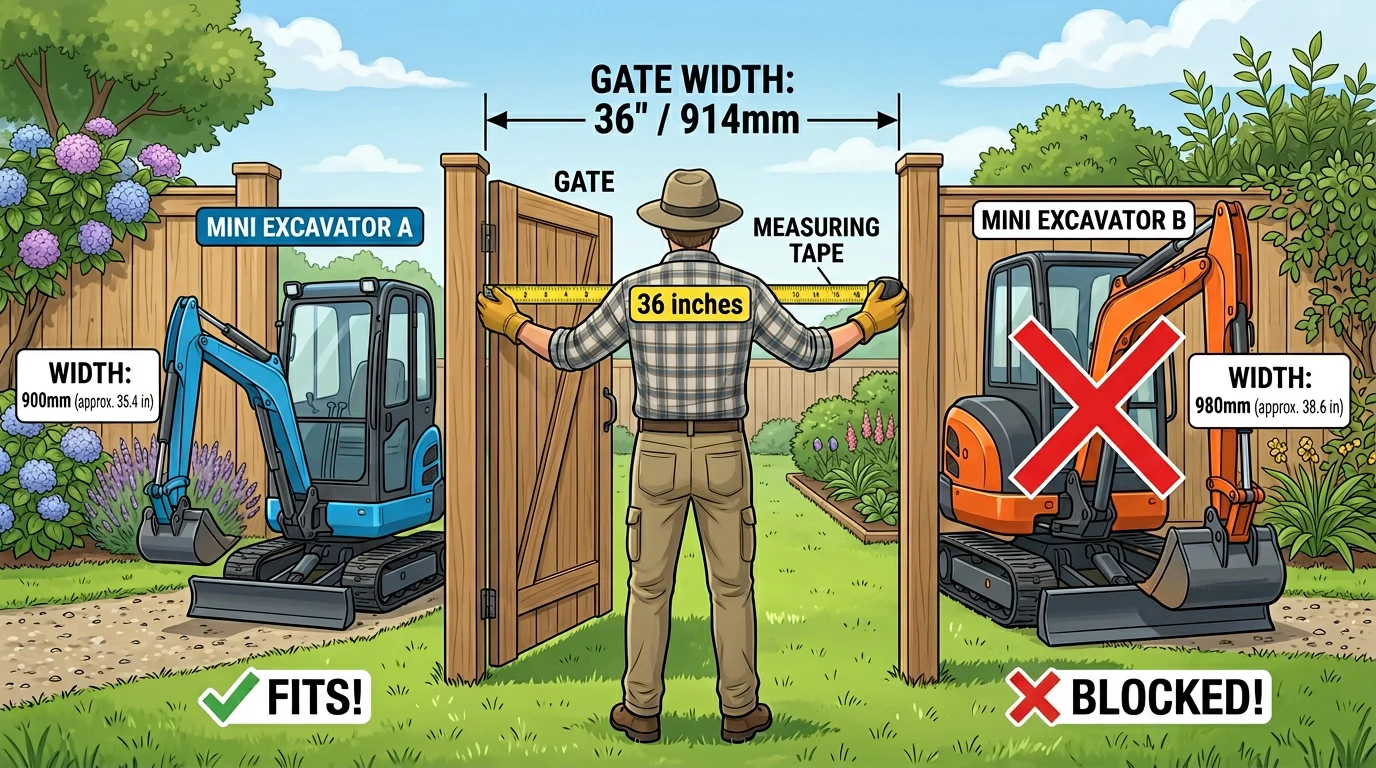
Standard residential gates are 36 inches (914 mm) wide. If you cannot get the machine into your backyard, nothing else matters.
| Machine Width | Fits 36″ Gate? |
|---|---|
| Under 917 mm | Yes – R319 (917 mm) works |
| 950–980 mm | Tight – may need hinge or panel removal |
| Over 980 mm | No – remove fence panel or use alternative access |
Action step: Measure your narrowest gate opening before you even look at specifications.
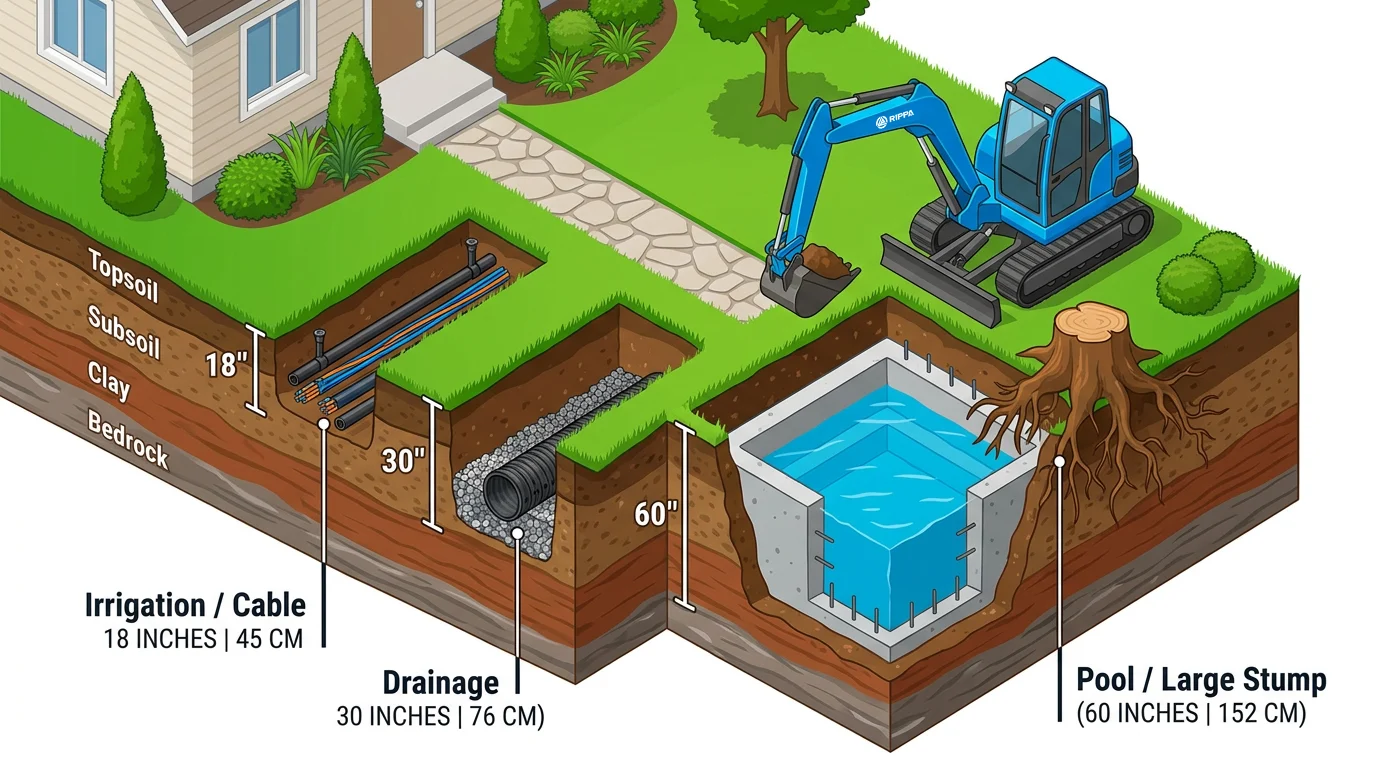
Your machine’s maximum digging depth should exceed your deepest required depth by at least 6 inches for comfortable operation.
| Project | Typical Depth Needed |
|---|---|
| Garden trench (irrigation) | 12–18 inches |
| French drain | 24–36 inches |
| Small tree stump (under 12″) | 18–24 inches |
| Foundation for shed | 24–48 inches |
| Swimming pool | 48–72 inches |
Typical depths by machine size:
1.0–1.5 tons: 5–7 ft – enough for landscaping.
1.5–2.5 tons: 8–10 ft – suitable for most residential projects.
2.5–3.5 tons: 10–12 ft – commercial grade.
Digging force (measured in kN) determines how easily the machine breaks through compacted soil, clay, or roots.
| Force | Suitable For |
|---|---|
| 9–11 kN | Loose soil, garden beds |
| 11–15 kN | Compacted soil, small roots |
| 15–20 kN | Heavy clay, medium stumps |
| 20+ kN | Rock, large stumps, demolition |
Rule of thumb: If you have clay or rocky soil, choose a machine with at least 12 kN digging force. For regular stump removal, look for 15 kN or more.
Do you have a trailer and a truck capable of towing the machine? If not, consider dealer delivery and keeping the machine on your property.
| Machine Weight | Trailer Type | Minimum Truck |
|---|---|---|
| Under 1,500 kg | Single‑axle (3,500 lb) | Half‑ton pickup |
| 1,500–2,200 kg | Tandem‑axle (7,000 lb) | Half‑ton or 3/4‑ton |
| Over 2,200 kg | Heavy tandem (10,000+ lb) | 3/4‑ton or 1‑ton |
If you don’t own a trailer: Many owners choose dealer delivery once and keep the machine on their property permanently. This is often the most convenient and cost‑effective solution.
| Factor | New | Used |
|---|---|---|
| Price | Higher | 30‑50% lower |
| Warranty | Competitive coverage | Typically none or limited |
| Hours | Zero | 500–3,000+ |
| Maintenance history | None needed | Critical – request records |
| Best for | Long‑term ownership, heavy use | Occasional use, tight budget |
Recommendation: For homeowners using the machine 100–200 hours per year, a well‑maintained used machine with a Kubota engine offers excellent value. For contractors or daily use, new with warranty is safer.
Used inspection checklist: Check hour meter, look for leaks, test all functions, inspect tracks (50%+ life left), and ask for service records. A machine with complete records is worth 10‑20% more.
| Attachment | Typical Use | ROI |
|---|---|---|
| Grading blade | Driveway leveling, spreading gravel | 1 driveway repair |
| Hydraulic thumb | Grabbing stumps, rocks, logs | 3–5 stump removals |
| Auger | Fence posts, tree planting | 1 fencing project |
| Quick coupler | Fast attachment changes | Saves hours of labor |
If your machine does not already have a hydraulic quick coupler, add it immediately. It turns a 15‑minute attachment change into a 30‑second operation from the cab.
The purchase price is only part of the equation. Over 5 years of typical homeowner use (200 hours/year), a $25,000 excavator will cost:
| Cost Component | 5‑Year Total |
|---|---|
| Purchase price | $25,000 |
| Fuel (1.4 L/h × $1.20 × 1,000h) | $1,680 |
| Maintenance | $2,500 |
| Minor repairs | $1,000 |
| Resale value (after 5 years) | –$12,000 |
| Net 5‑year cost | $18,180 |
Payback period: Most homeowners break even in 2‑3 years through avoided contractor costs ($50‑100 per hour).
Q: What is the best mini-pelle for a first‑time buyer?
A: A 1.5–1.8 ton machine like the RIPPA R15 is the most popular. It balances power, transportability, and ease of use. 96% of owners would recommend it.
Q: Do I need a special license to operate a mini excavator on my own property?
A: No. For personal use on your land, no license is required. Commercial work may have different rules – check local regulations.
Q: How long does a mini excavator last?
A: With proper maintenance, 8,000–12,000 hours (10‑15 years for homeowners). The Kubota engine alone is known to exceed 10,000 hours.
Q: Should I buy a zero tail swing machine?
A: Only if you work regularly near walls, fences, or structures. Zero tail swing adds cost but is invaluable for tight spaces.
Q: What is the best brand of mini excavator?
A: Premium brands like Kubota and Caterpillar have excellent resale value. Value brands like RIPPA offer the same Kubota engines and more standard features at 30‑40% lower cost – ideal for homeowners.
Choosing the right mini excavator comes down to three questions:
Will it fit through my gate? Measure first.
Can it dig deep enough for my hardest project? Add 6 inches of margin.
Can I transport it with my current setup? If not, arrange dealer delivery.
For most homeowners, a 1.5–2.5 ton machine with a Kubota engine, hydraulic quick coupler, and grading blade is the sweet spot. Take your time, measure carefully, and pick a machine that will serve you for years – not just for tomorrow’s project.
Ready to start your search? Contact a RIPPA dealer for a demonstration. Bring your project list and gate measurements. The right machine is waiting.





 Accueil
 Produits
 Courriel
 WhatsApp