apr 19, 2026
For most farms and homesteads (5–20 acres), a 1.5–2.5 ton mini excavator is the ideal choice. It handles drainage trenches, fence posts, stump removal, pond digging, and landscaping. Key factors: gate access (measure your barn doors), digging depth (at least 2.5 m), and attachment compatibility. Модельs like RIPPA R15 (1.5t) or R322L (1.8t) offer the best balance of power and transportability for agricultural use.
The bottom line: A well‑chosen mini excavator pays for itself in avoided contractor costs within 2–3 years on a working farm.
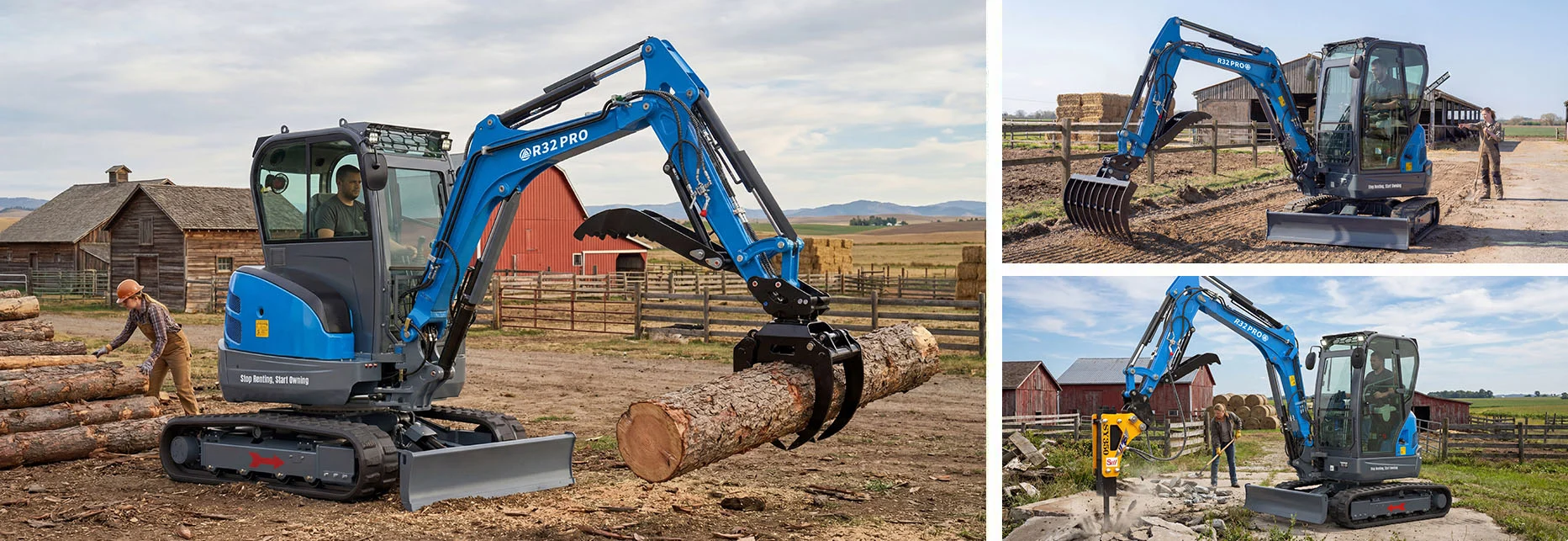
Rural property owners face constant earthmoving tasks: digging drainage ditches, clearing brush, planting trees, removing stumps, maintaining farm roads, and excavating small ponds. Hiring contractors for each job is expensive and slow – waiting weeks for someone to show up. Renting equipment means hauling machines back and forth and working around rental schedules.
Owning a mini excavator gives you freedom: start a project when you want, work at your pace, and use the machine for dozens of tasks year after year. RIPPA mini excavators are designed with homeowners and small farmers in mind – easy to learn, simple to maintain, and versatile enough for 80% of common land management tasks.
Real‑world savings: A single drainage trench can cost $1,500‑$3,000 if hired out. With your own excavator, the same job costs $20‑$30 in fuel.
| Specification | Why It Matters | Recommended Minimum |
|---|---|---|
| Digging depth | Deep drainage, pond excavation, stump removal | 2.5 m (8 ft) |
| Digging force | Breaking clay, roots, and compacted soil | 10–15 kN |
| Transport width | Passing through barn doors and gates | Under 1,000 mm (39″) |
| Weight | Stability and towing requirements | 1.5–2.5 tons |
| Hydraulic flow | Running augers, grapples, and thumbs | Standard auxiliary flow |
RIPPA models for farm use:
R15 (1.5t): Best for smaller farms (under 10 acres), driveway repair, light trenching.
R322L (1.8t): Boom protection for truck loading, retractable tracks for narrow gates.
R330 (2.0t): X‑frame durability, Kubota engine, ideal for drainage and land clearing.
R350 (3.5t): Contractor‑grade power for large properties and heavy excavation.
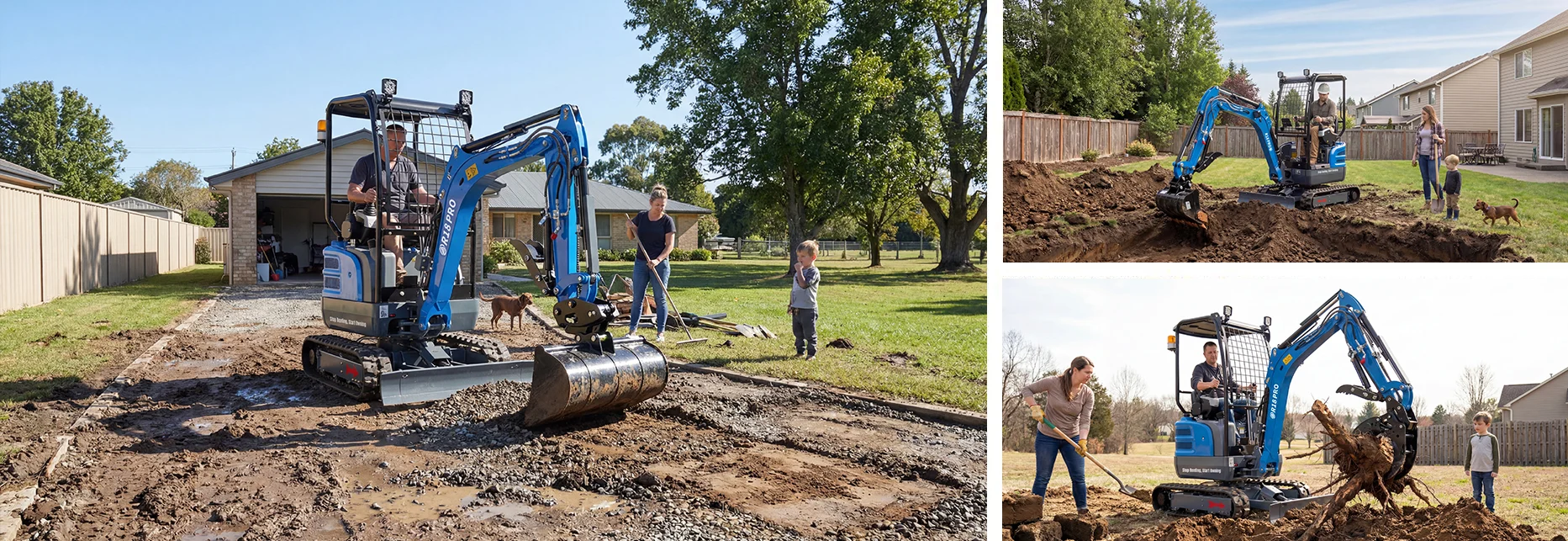
A mini excavator is only as useful as its attachments. For farm and homestead work, prioritize:
| Attachment | Typical Use | ROI |
|---|---|---|
| Hydraulic thumb | Grabbing rocks, logs, debris | 3‑5 stump removals |
| Auger | Fence posts, tree planting | 1 fencing project |
| Grading blade | Farm road maintenance, leveling | 1 season |
| Grapple | Brush clearing, log handling | 2‑3 clearing jobs |
Pro tip: A hydraulic thumb is essential for stump removal and material handling. Without it, you’ll struggle to pick up irregular objects. RIPPA models with auxiliary hydraulics can run a thumb directly from the cab.
Assume 200 hours per year of farm work over 5 years (1,000 total hours). For a RIPPA R15 ($25,000 new):
| Cost Component | 5‑Year Total |
|---|---|
| Purchase price | $25,000 |
| Fuel (1.4 L/h × $1.20 × 1,000h) | $1,680 |
| Maintenance (oil, filters, grease) | $2,500 |
| Minor repairs | $1,000 |
| Attachments (thumb, blade, auger) | $3,000 |
| Resale value after 5 years | –$12,000 |
| Net 5‑year cost | $21,180 |
Payback calculation: If you would otherwise hire contractors for 200 hours/year at $75/hour, you’d spend $15,000 annually. The machine pays for itself in under two years.
Used machine option: A well‑maintained used RIPPA with 800‑1,500 hours can cost 30‑40% less, accelerating payback.
Farmers often move equipment between fields or properties. Check your towing setup before buying:
| Machine Weight | Trailer Type | Minimum Truck |
|---|---|---|
| Under 1,500 kg | Single‑axle (3,500 lb) | Half‑ton pickup |
| 1,500–2,200 kg | Tandem‑axle (7,000 lb) | 3/4‑ton truck |
| Over 2,200 kg | Heavy tandem (10,000+ lb) | 1‑ton truck |
If you don’t own a trailer: Many farmers keep the machine on their main property permanently and use it for on‑farm tasks only. Dealer delivery is a one‑time cost of $500‑$1,500.
Storage: Most mini excavators fit in a standard barn bay (approx. 2.5 m long, 1 m wide). Outdoor storage with a breathable cover is also acceptable if you run the machine monthly to keep seals lubricated.
Q: Can a mini excavator remove large tree stumps?
A: Yes, with sufficient digging force. A 1.8‑2.2 ton machine (15‑22 kN) can remove stumps up to 24 inches. For larger stumps, consider a 3.5‑ton model or use a stump grinder attachment.
Q: What’s the best way to dig drainage ditches?
A: Use a standard bucket or a trencher attachment. Mark the ditch line, start at the low end, and maintain consistent slope (1‑2%). Check depth every 10 feet.
Q: How deep can a mini excavator dig for pond construction?
A: A 2.5‑3.5 ton machine can dig 8‑12 feet deep – sufficient for most farm ponds. For larger ponds, excavate in stages or consider a larger machine.
Q: Do I need a special license to operate a mini excavator on my farm?
A: For personal use on your own property, no license is required. If you do commercial work for others, OSHA training and certification may apply.
Q: How often should I service my excavator?
A: Daily: visual inspection and grease. Every 250 hours: engine oil and filter change. Every 500 hours: fuel filter and air filter. Every 1,000 hours: hydraulic oil change.
For farmers and homesteaders, a Minigravemaskine is one of the most versatile investments you can make. It handles drainage, fencing, stump removal, land clearing, and road maintenance – tasks that would otherwise cost thousands in contractor fees. RIPPA offers a range of compact excavators from 1.5 to 3.5 tons, all powered by Kubota engines and backed by competitive warranty coverage. Choose the size that matches your land and budget, add a few key attachments, and you’ll wonder how you ever managed without one.
Next step: Measure your barn doors and list your top three projects. Then contact a RIPPA dealer for a demonstration on your property.


 Hjem
Hjem
 Produkter
 E-mail
 WhatsApp